
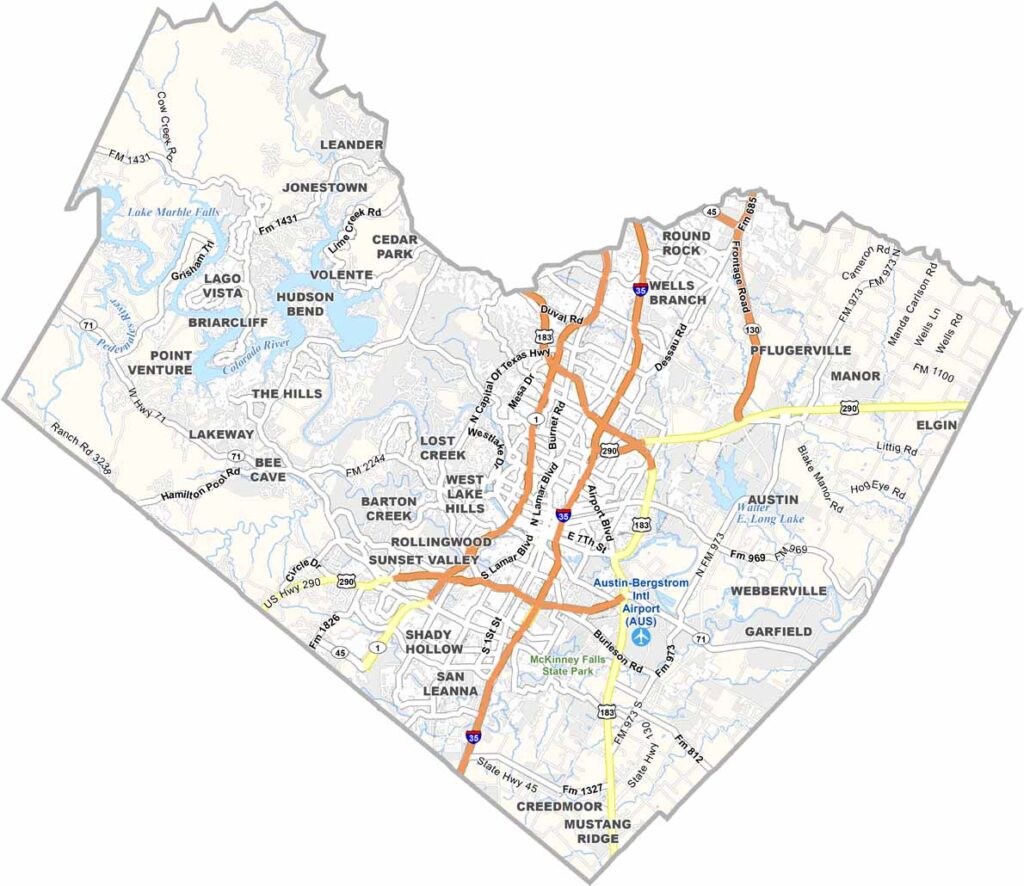
The heart of Texas beats in Travis County, where Austin, the state capital, takes center stage. It’s weird, it’s wonderful, and it’s growing at a rapid pace.
The county stretches from the Edwards Plateau to the Blackland Prairie. Hills dominate the west, while flatter land covers the east. Lake Travis is a popular destination for boating and swimming. Travis County is also a melting pot of politics, music, and innovation.
The tech industry continues to boom, but plenty of old-school Texas charm remains. Traffic can be a nightmare, but the food scene is out of this world. This is definitely not your typical Texas county.
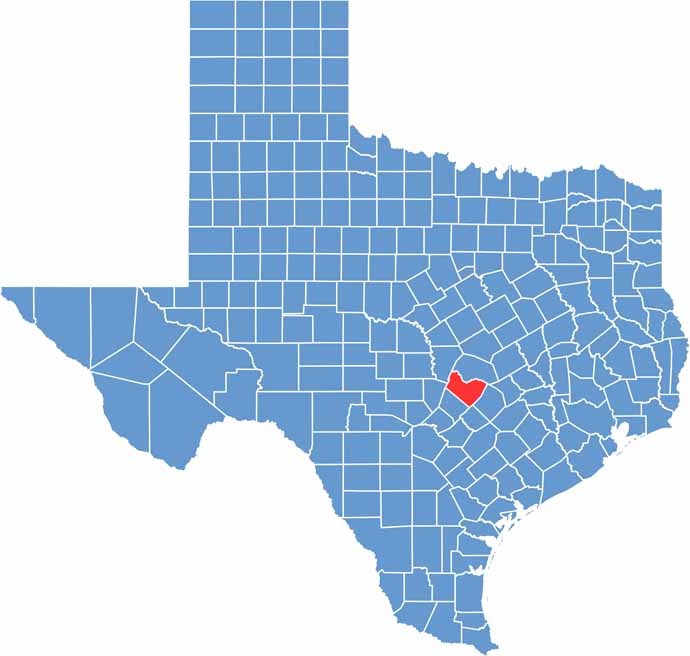
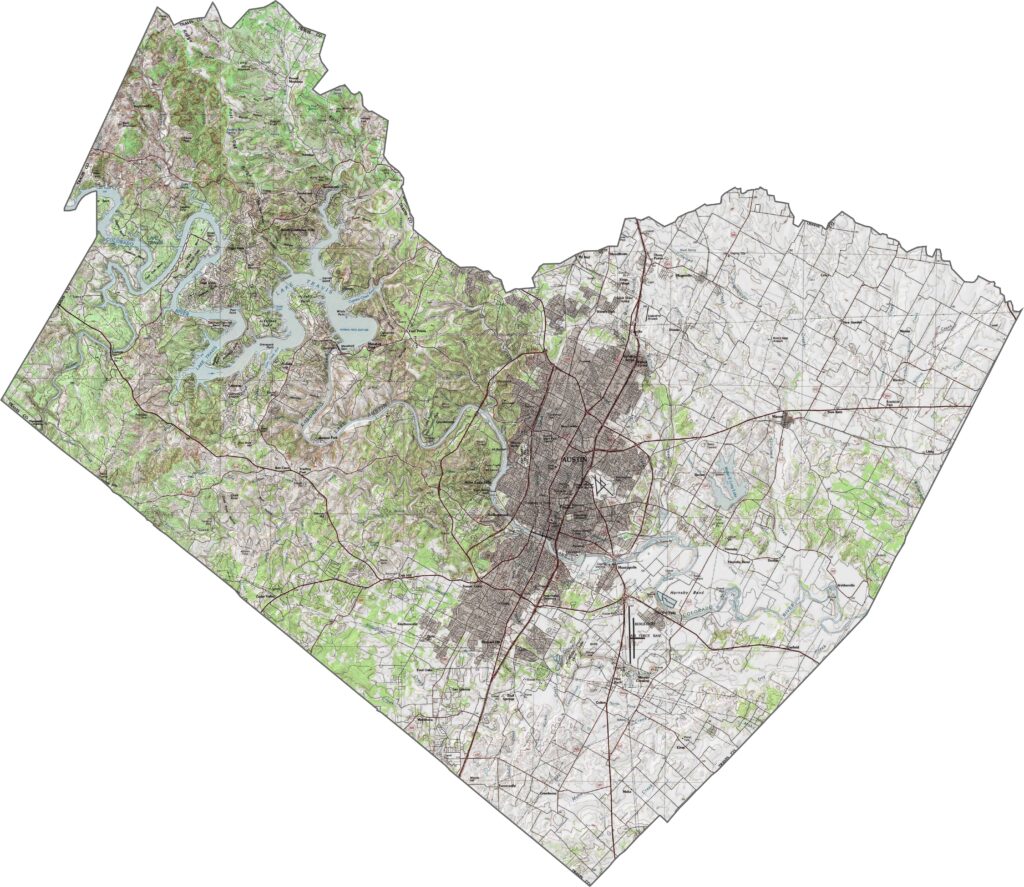
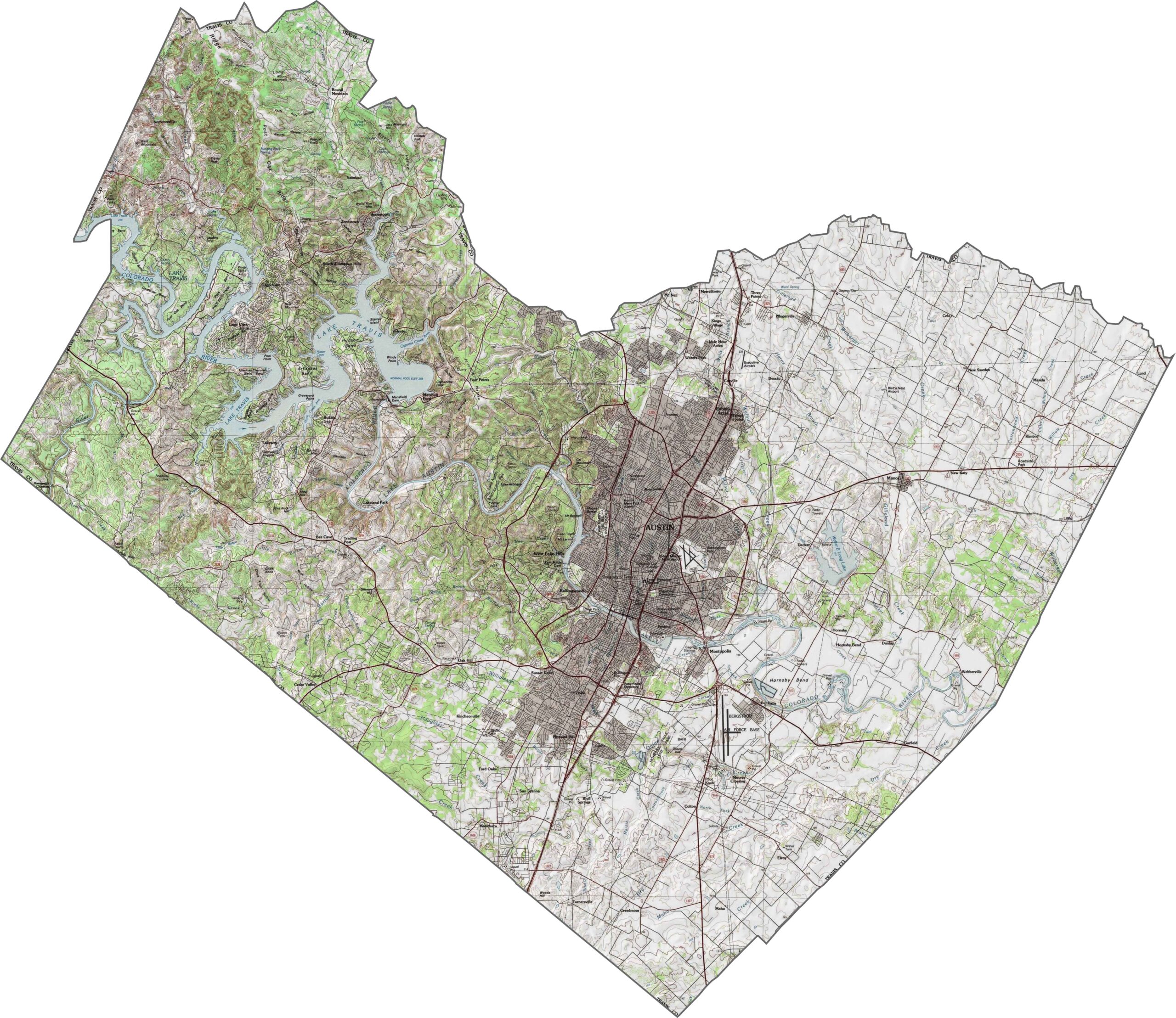
Travis County is where the Hill Country begins. Elevation rises sharply west of Austin, creating steep slopes and limestone cliffs. The standout feature is Lake Travis, a long reservoir that winds through the canyon-like terrain.
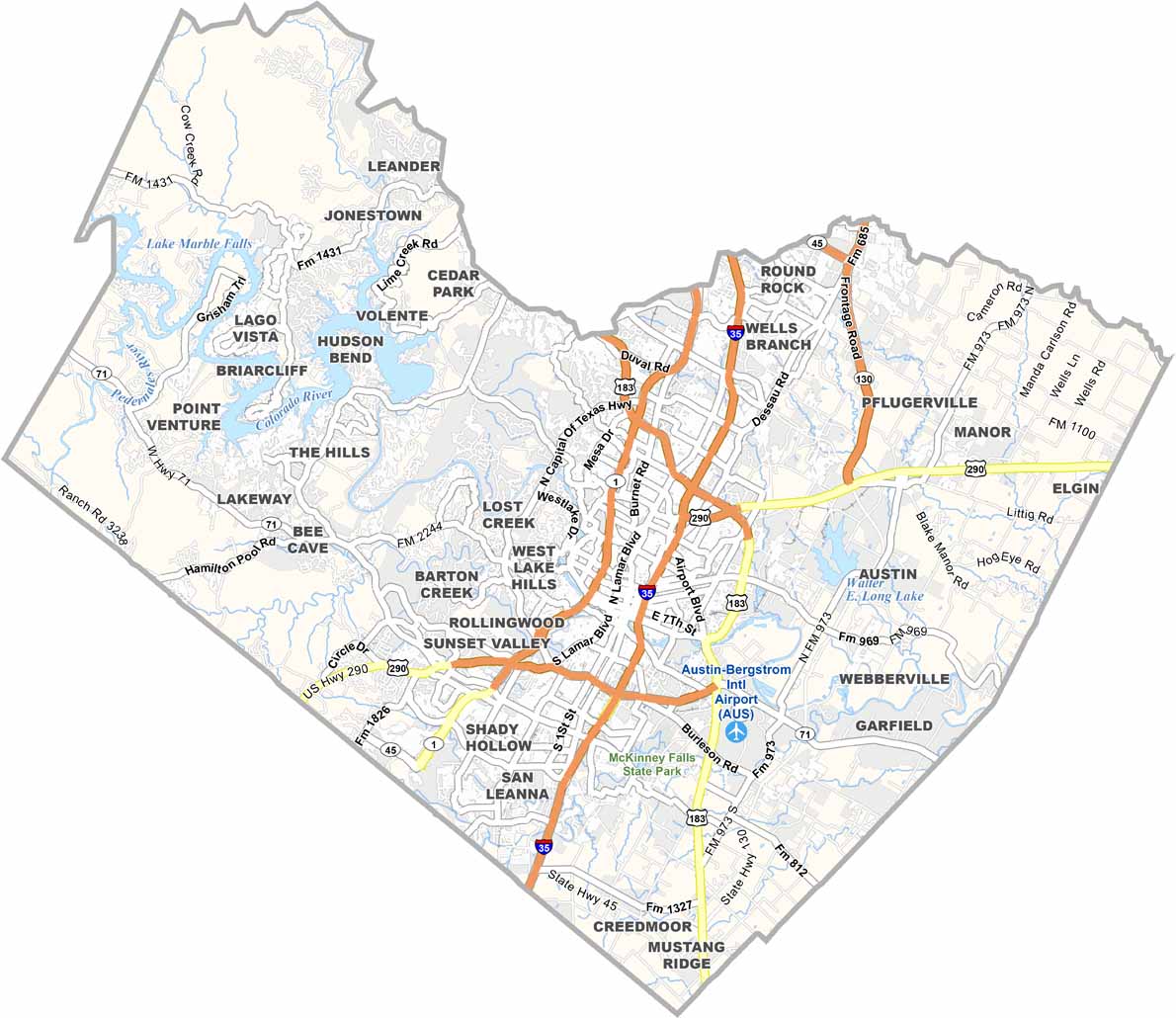
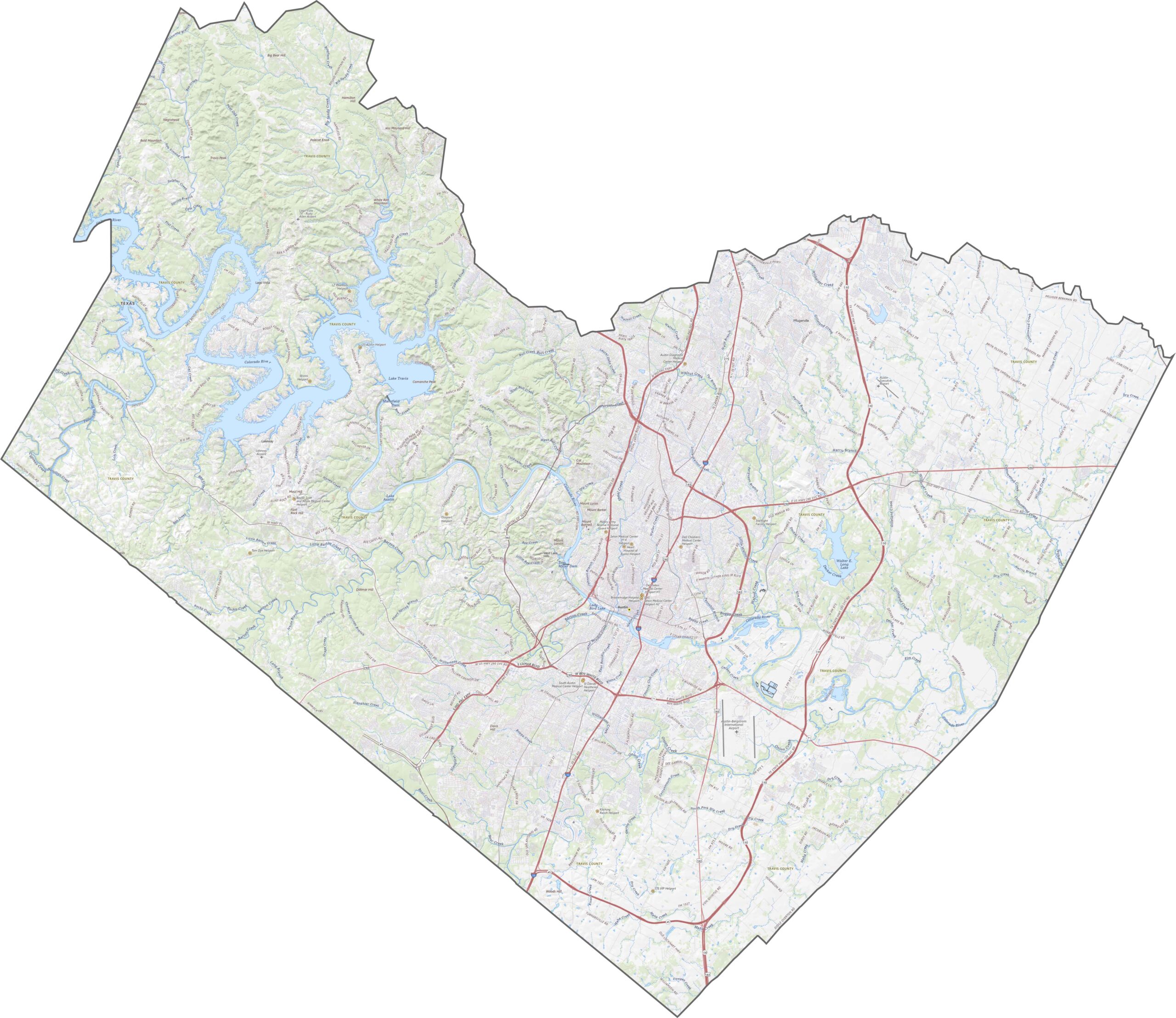
Travis County is filled with roads, ramps, and loops, all leading in and out of Austin. East-west corridors cut across the hills, while north-south highways like I-35 run through the suburbs. It’s busy, built-up, and always moving. Use our zoom tool below to find the best route.
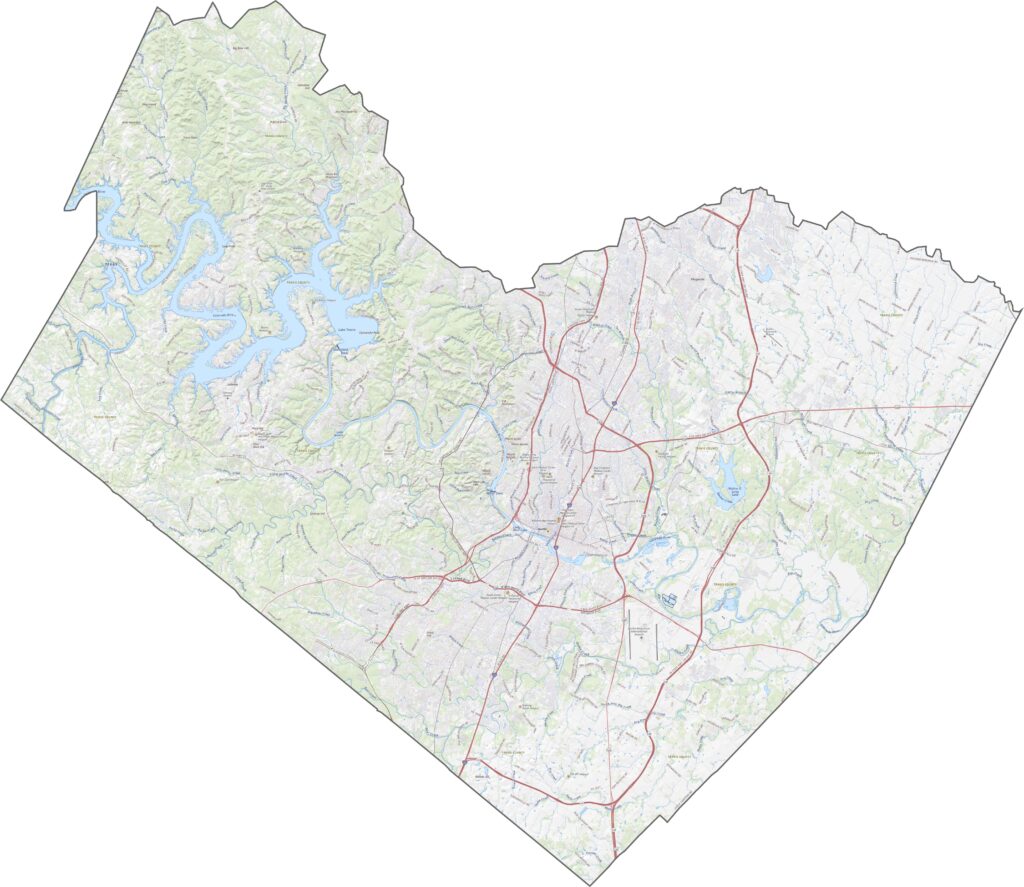
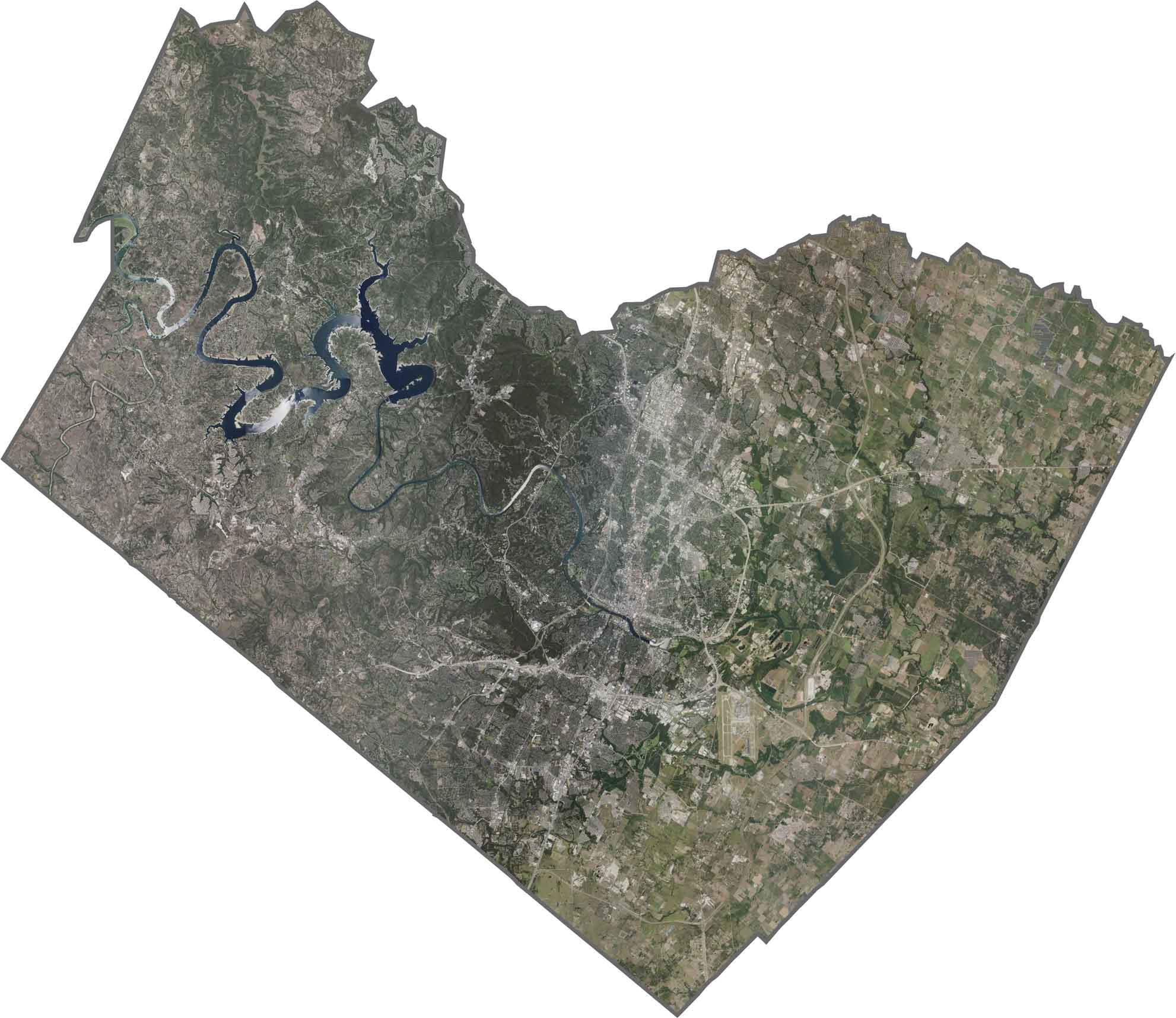
The western side of Travis County is rugged, with patchy vegetation and winding roads crossing the landscape. Austin dominates the center, while Lake Travis and the Colorado River wind through the surrounding hills.
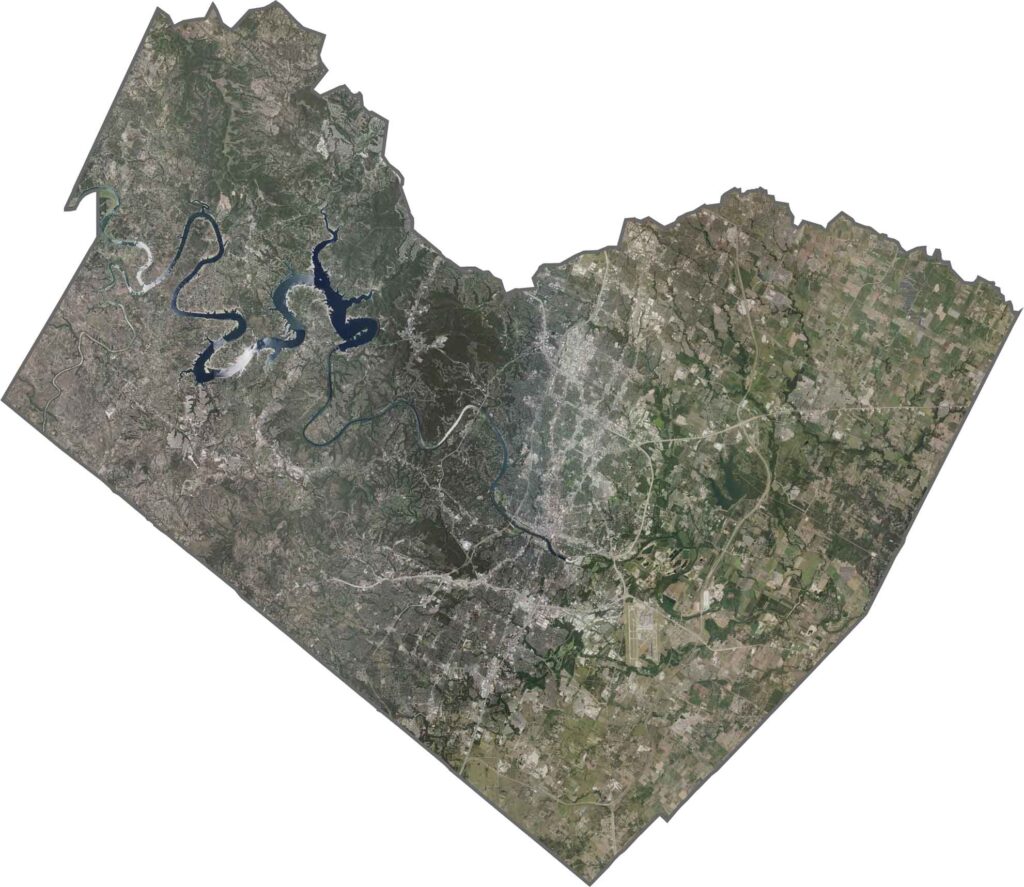
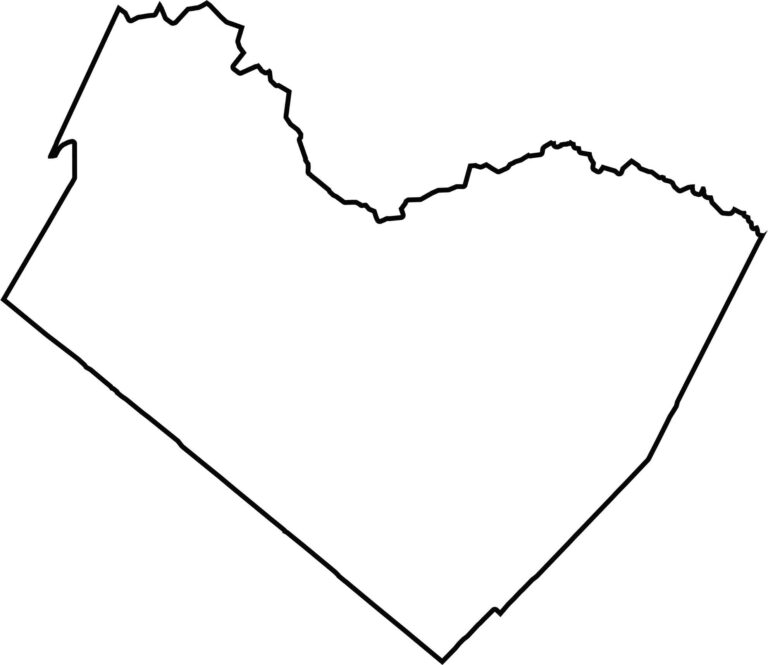
The county has a long, stretched shape that runs almost diagonally. It doesn’t follow a river along its edge, but waterways like the Colorado River run right through it. Surrounded by other Texas counties, Travis County sits in Central Texas with no state border nearby.
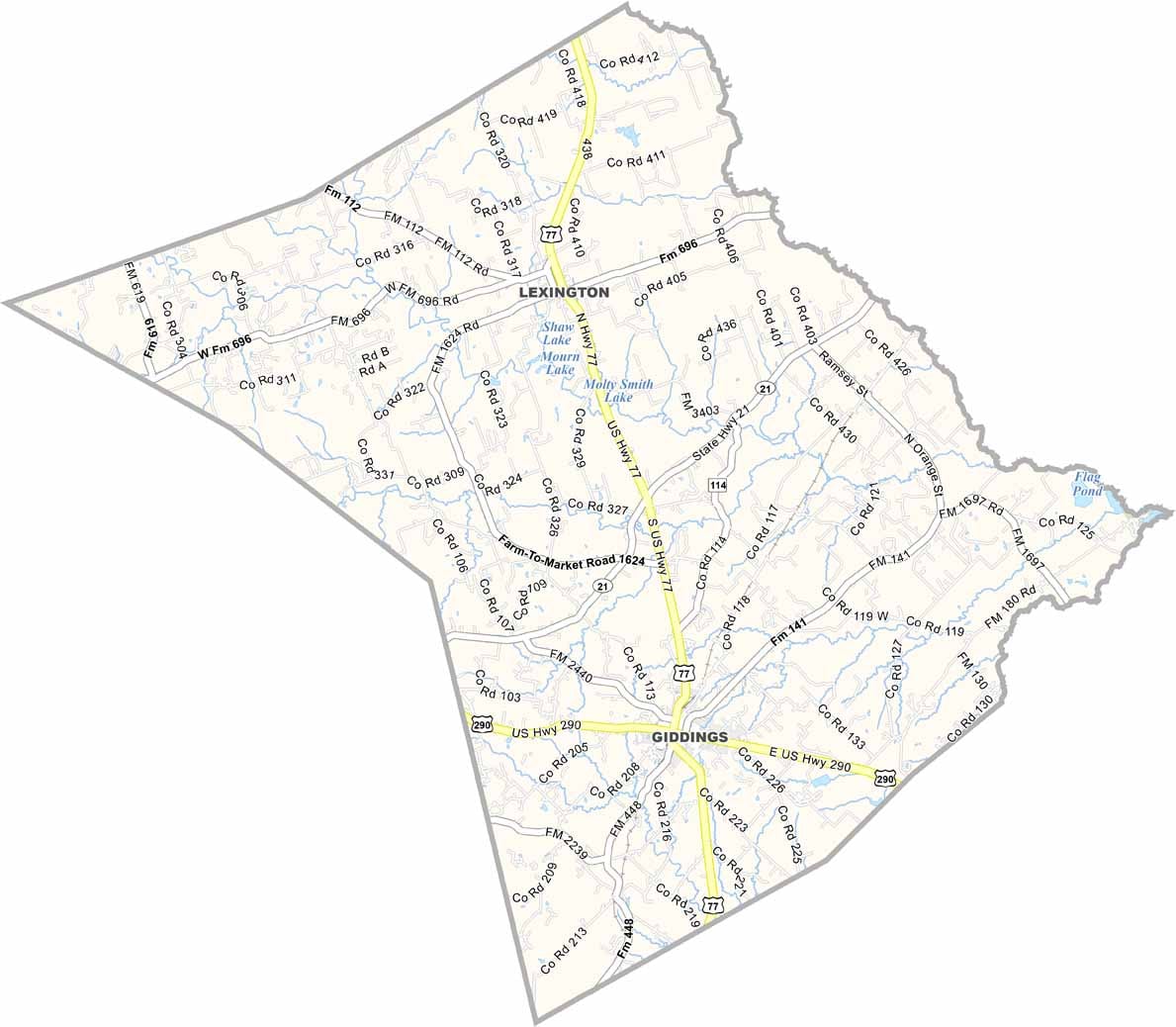
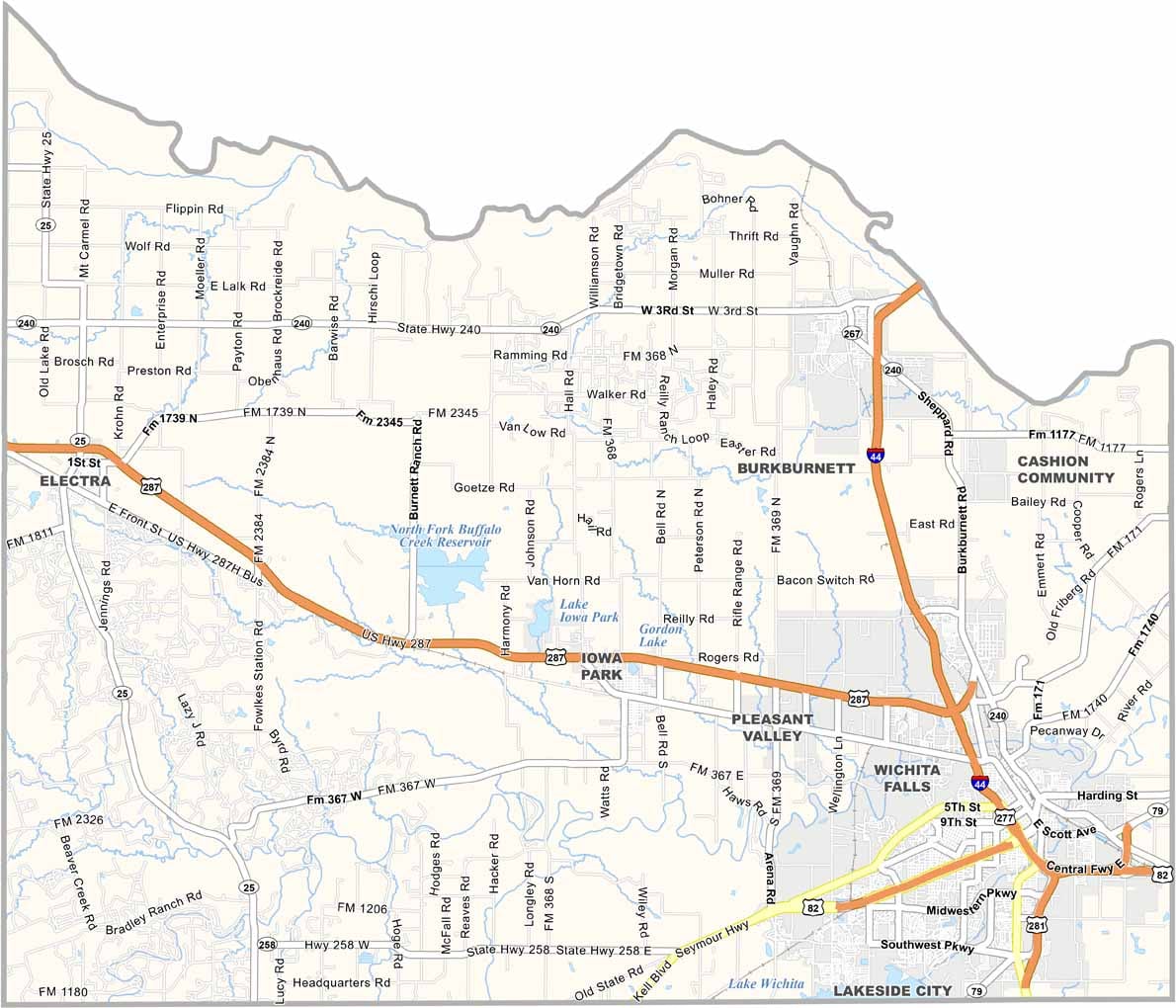
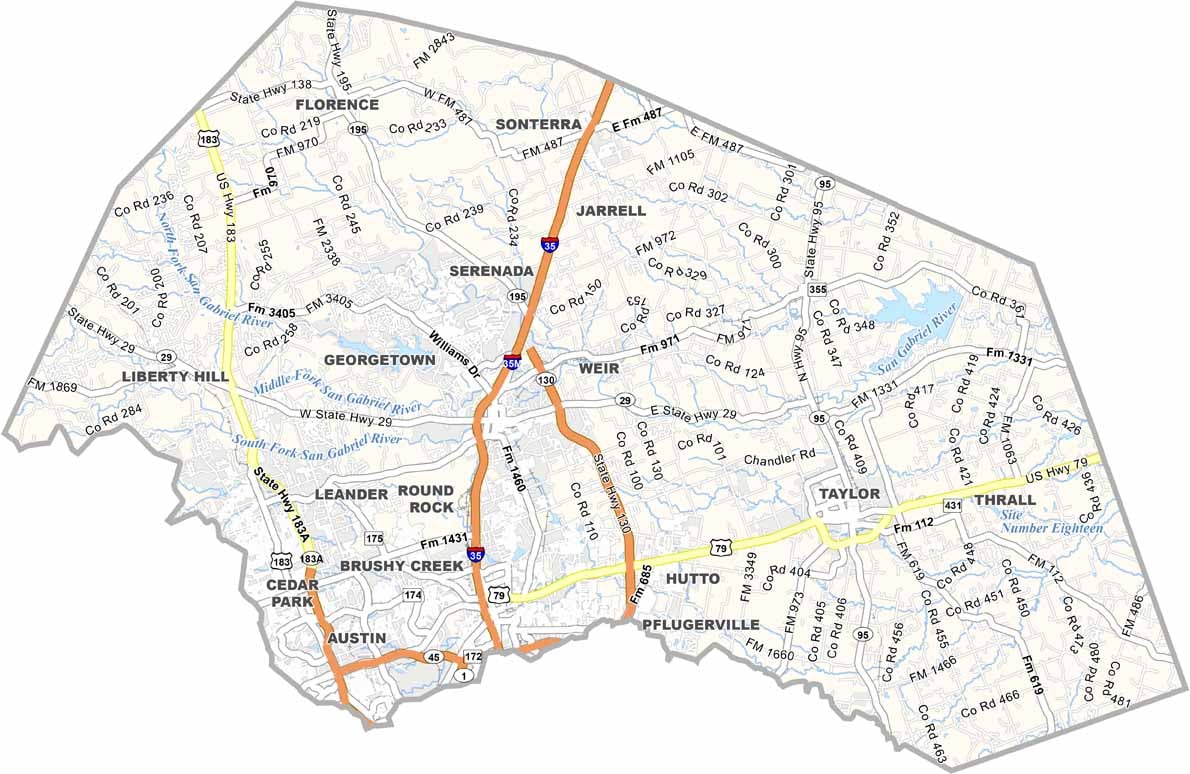
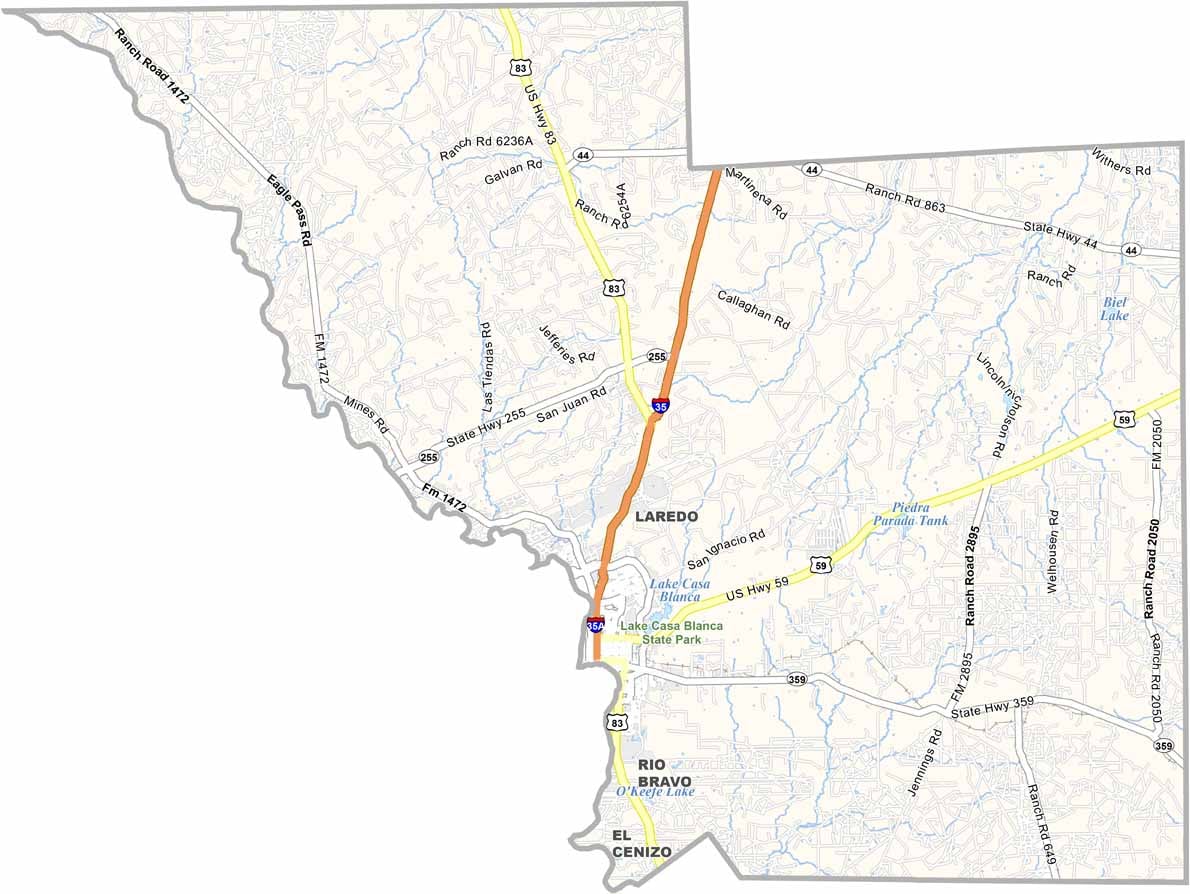

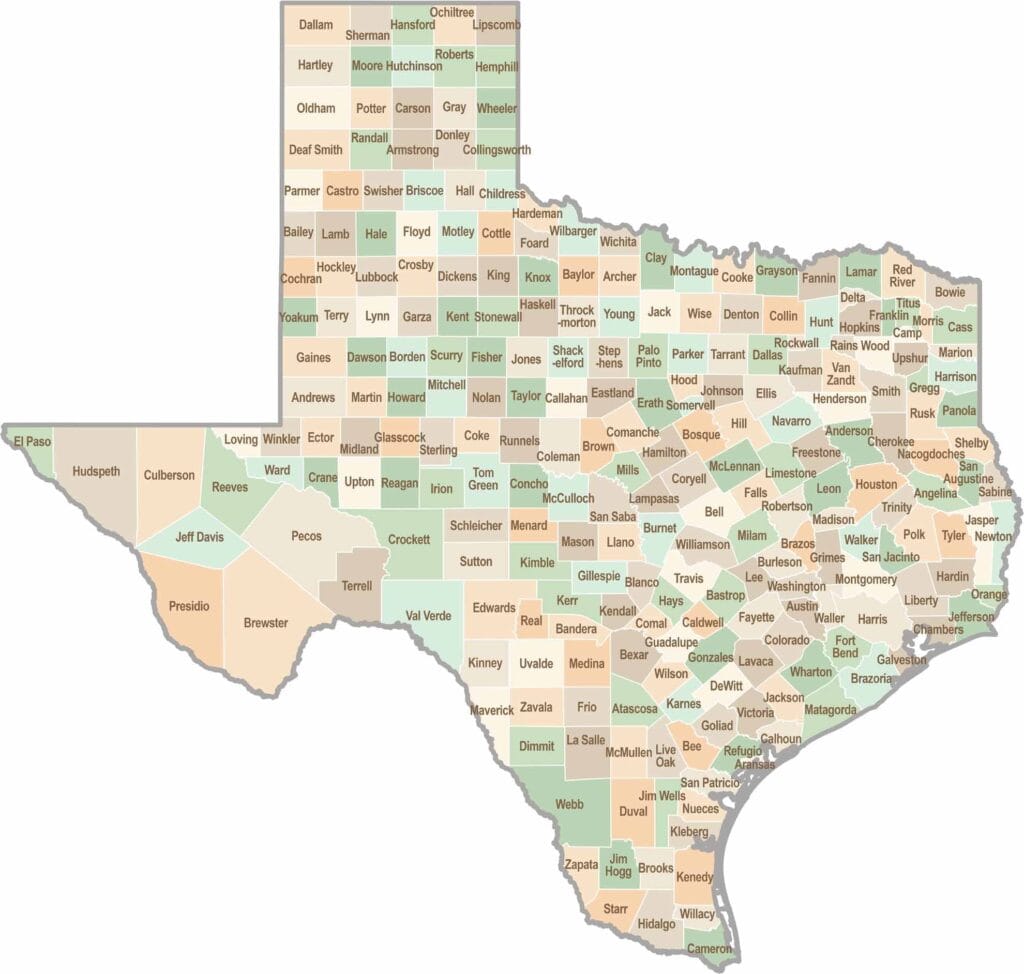
Discover all 254 legendary Texas county maps, covering the Lone Star State from the Panhandle to the Rio Grande. That means more rodeos, honky-tonk, and Texas BBQ.